Your Excellencies,
Distinguished Ambassadors,
Esteemed colleagues, Ladies and Gentlemen,
It is a great pleasure to welcome all of you here in the ancient city of Samarkand – a timeless crossroads of civilizations and a living testament to the enduring power of dialogue, learning, and culture.
This year marks a truly historic moment for our nation and for UNESCO itself: the opening of the 43rd Session of the UNESCO General Conference here in Samarkand – the first time in forty years that this landmark gathering is being held outside Paris, and the very first time in Central Asia and Uzbekistan.
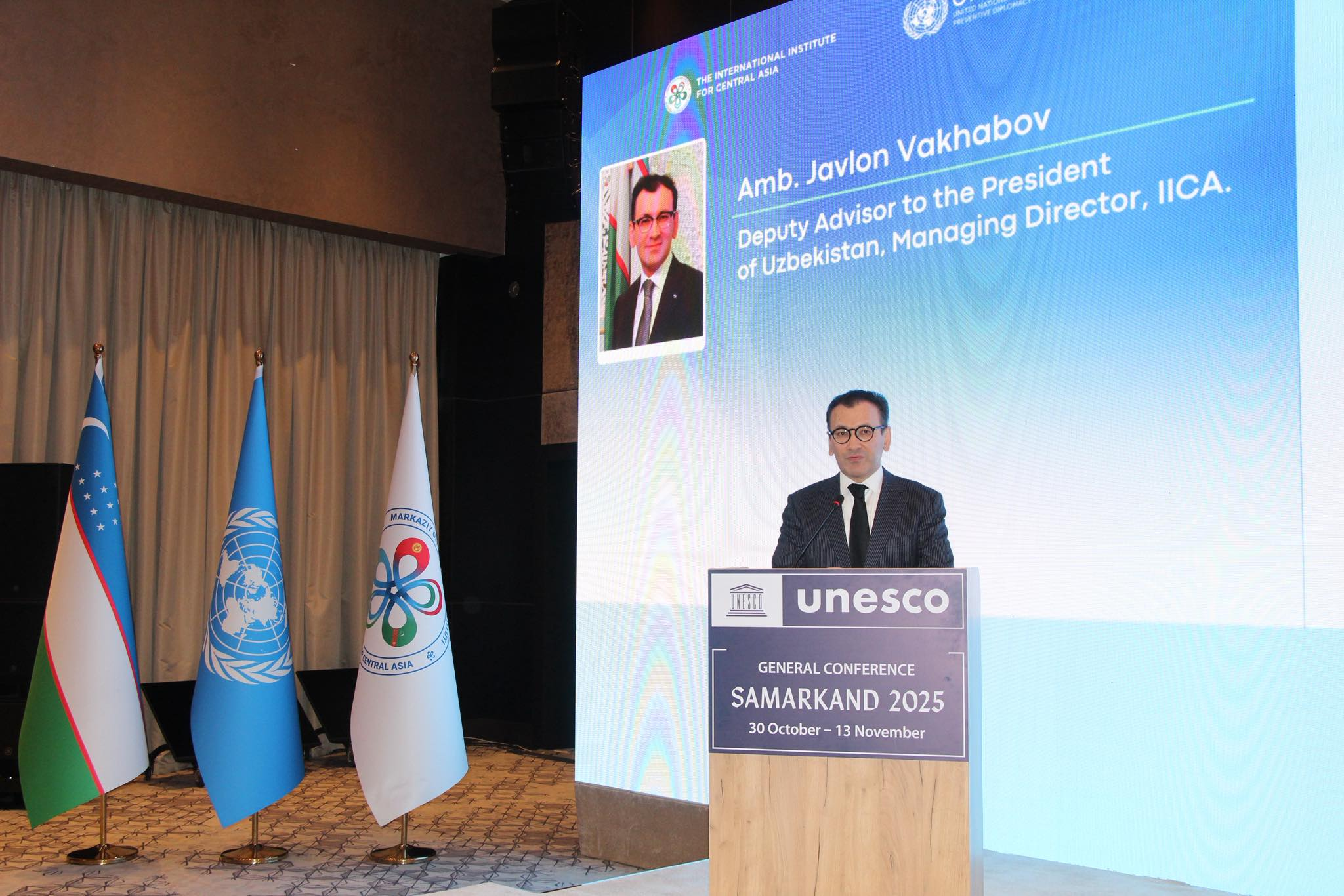
Within this remarkable framework, today’s side event, “A New Central Asia: The Path to Shared Development and Prosperity through Culture, Education, and Science,” provides a unique opportunity to reaffirm our shared commitment to building a united, forward-looking, and dynamic Central Asia.
Once again, Samarkand brings together representatives of our nations and international partners to celebrate the vital role of culture, education, and science in strengthening trust, inspiring creativity, and shaping a more peaceful and prosperous future for our region and beyond.
Dear friends,
Over the past eight years, both – the world and our region within it – have experienced profound transformation. Since the last Consultative Meeting of the Heads of State of Central Asia in 2018, a series of far-reaching global developments has reshaped the strategic landscape in which we operate.
Thanks to the political will, mutual trust, and strategic vision of our leaders, Central Asia has transformed into a space of dialogue, confidence, and constructive partnership.
An important recent milestone in this transformation was the Khujand Declaration of 2025, signed by Uzbekistan, Kyrgyzstan, and Tajikistan, which finalized the long-standing border settlement and transformed a former source of tension into a platform for cooperation.
Furthermore, Central Asia is steadily advancing the institutionalization of regional cooperation. Regular meetings of the Heads of our National Security Councils have now become an established practice, reflecting the region’s collective commitment to shared responsibility and strategic coordination in ensuring peace and stability.
Another major step was the Treaty of Friendship, Good-Neighborliness and Cooperation for the Development of Central Asia in the 21st Century, signed at the Cholpon-Ata Meeting in 2022.
This historic document commits our states to uphold mutual support and respect for sovereignty and territorial integrity; to expand cooperation in security, trade, transport, energy, water, environment, and culture; to coordinate positions on regional and international issues.
Building upon this foundation, the 2024 Summit of the Heads of State of Central Asia in Astana marked another important turning point. At this meeting, our leaders adopted the Concept for the Development of Regional Cooperation: Central Asia – 2040, a forward-looking document that defines the region’s long-term vision for strengthening unity, expanding interaction, and enhancing region’s role and agency in international affairs.
Together, these developments mark a decisive step toward a stronger, more cohesive, and forward-looking Central Asia – one that speaks with a unified voice and acts with shared purpose. It is within this positive dynamic that we now look ahead to the next milestone in our regional dialogue.
This growing spirit of cooperation – political, institutional, and practical – is also reflected in the economic sphere. It is noteworthy that these efforts have already produced tangible results: since 2016, Central Asia has witnessed a remarkable surge in regional cooperation – the regional economy has surpassed 500 billion US dollars, intra-regional trade has grown by 250 percent to reach 11 billion dollars, and mutual investments have nearly doubled to 840 million dollars.
The forthcoming Seventh Consultative Meeting of the Heads of State of Central Asia, to be held this November in Tashkent under Uzbekistan’s chairmanship, comes at a defining moment for regional cooperation. Building on the solid foundation established since assuming the chairmanship, Uzbekistan has been actively advancing the agenda of regional solidarity, mutual trust, and practical connectivity.
The Summit is expected to further consolidate this positive dynamic – offering an opportunity for Central Asian leaders to set new long-term priorities for deepening integration and enhancing the region’s collective voice on the global stage.
Honorable delegates,
At the same time, the “Central Asia+” dialogue mechanisms have emerged as a practical platform for building structured partnerships between the countries of our region and major global and regional actors.
Today, Central Asia engages with five G7 and ten G20 economies through these formats – including “Central Asia + EU,” “Central Asia + United States,” “Central Asia + Russia,” “Central Asia + China,” “Central Asia + Gulf States,” and “Central Asia + Japan.”
Each of these mechanisms reflects the growing recognition of Central Asia’s strategic role as a vital bridge between East and West, and between North and South.
Expanding these dialogue platforms remains one of our key priorities, enabling coordinated responses to shared challenges and advancing the region’s integration into the global system of partnerships.
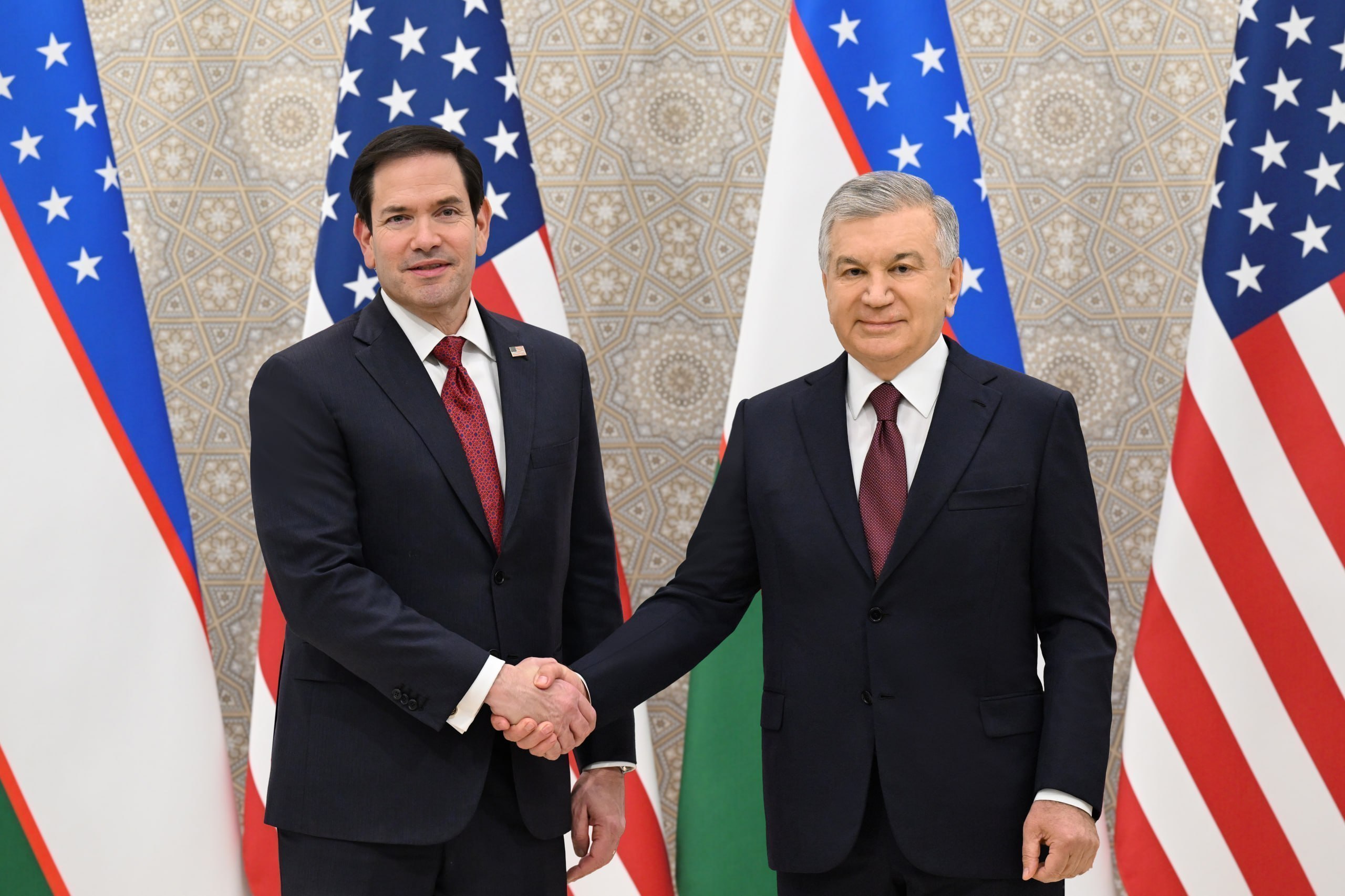
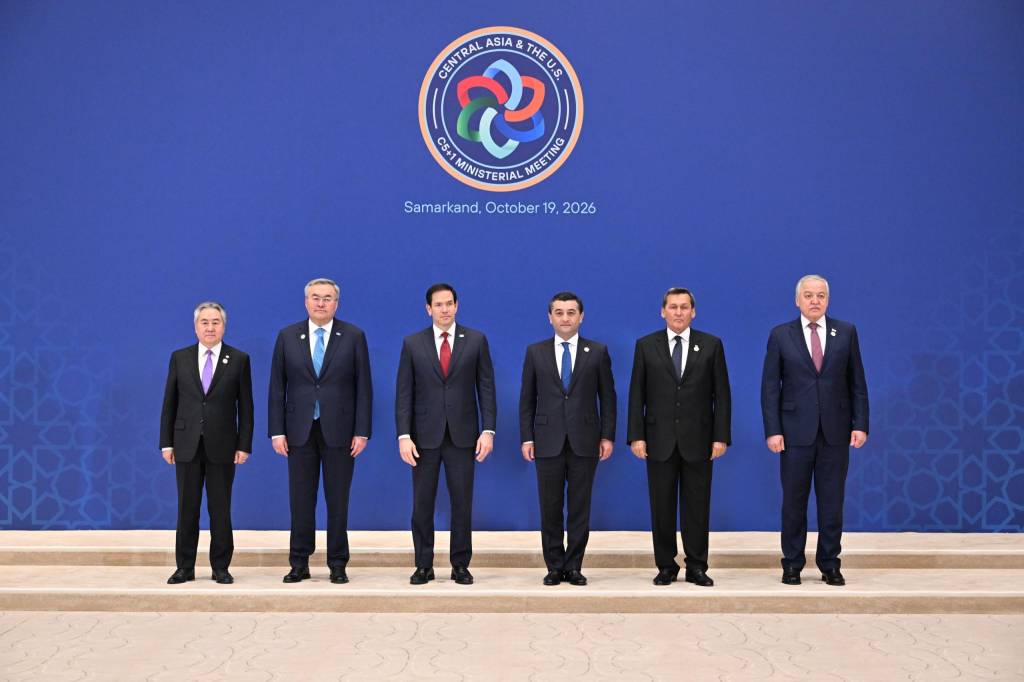
In this regard, the recent official visit of the President of the Republic of Uzbekistan to the United States gave new momentum to strengthening the strategic partnership between our countries and advancing cooperation between Central Asia and the United States within the “C5+1” framework. During the visit, productive talks were held with President Donald Trump at the White House, and the President participated in the C5+1 Leaders’ Summit.
The agreements reached opened new opportunities for expanding political dialogue, trade, investment, and regional connectivity, further reinforcing Central Asia’s growing role as a reliable and forward-looking partner in global affairs.
Distinguished guests,
Alongside political and economic progress, the countries of Central Asia are now investing in what is perhaps the most enduring foundation of regional unity – close cooperation in education, culture, and science.
In recent years, we have witnessed unprecedented momentum toward the creation of a Common Educational Space in Central Asia. Among the key milestones are the Turkestan Declaration of 2021, followed by the successive Rectors’ Forums – held in Almaty (2022), Dushanbe (2023), and Bishkek (2024).
These forums have resulted in memoranda of understanding and dozens of bilateral cooperation agreements, promoting joint research projects, and curriculum alignment across the region.
These platforms are strengthening academic mobility, promoting mutual recognition of qualifications, and expanding joint research programs across the region.
In partnership with UNESCO, the region is implementing transformative initiatives such as the Regional Centre for Early Childhood Education in Tashkent – launched at the initiative of the President of Uzbekistan in 2022 – and the SmartED programme, which focuses on digital learning and teacher development.
At the same time, it is important to emphasize that the areas within UNESCO’s mandate – education, culture, and science – are of strategic significance as investments in human capital. They constitute the essential basis for ensuring long-term sustainable development and advancing regional integration. By investing in knowledge, creativity, and shared values, we are laying the foundation for lasting prosperity, resilience, and unity across Central Asia.
Dear colleagues,
In this context, particular attention should be drawn to several forward-looking initiatives proposed by the President of the Republic of Uzbekistan, in his address to the 43rd Session of the UNESCO General Conference held in Samarkand on 30 October 2025.
Of particular relevance to our shared regional agenda are the initiatives to establish a UNESCO Platform for Inclusive Education for children with special needs, to convene a World Summit on Vocational Education, and to implement the “AI–School” project to expand the responsible use of artificial intelligence in learning.
UNESCO Assistant Director-General for Education Stefania Giannini announced that in two years Uzbekistan will host the World Conference on Skills Development and Technical and Vocational Education – a major global forum that will highlight the region’s growing contribution to education transformation and lifelong learning.
Equally significant are President Shavkat Mirziyoyev’s proposals to create an International Institute of Digital Heritage and a UNESCO Academy on Women’s Leadership, together with a Global Forum of Women in Education, Culture, and Science — initiatives that fully align with our region’s vision for an inclusive, innovative, and knowledge-driven future.
Distinguished participants,
Under UNESCO’s auspices, the region has also advanced a number of landmark cultural initiatives. Within the project “Silk Roads Heritage Corridors in Central Asia – International Dimension of the European Year of Cultural Heritage” (2018–2024), over 1,000 experts – including heritage professionals, educators, tourism specialists, and bearers of traditional knowledge – have taken part in training and capacity-building activities.
The same project led to the creation of the virtual exhibition “Common Heritage of the Silk Roads”, developed jointly with museums from Iran, Kazakhstan, Kyrgyzstan, Tajikistan, Turkmenistan, and Uzbekistan, featuring 3D digital replicas of 60 key artefacts from across the region.
As of 2023, the Central Asian countries together account for 61 elements of Intangible Cultural Heritage inscribed on UNESCO’s Representative List – approximately 8.4 percent of all such elements worldwide.
Building on these achievements, the new project “Strengthening Capacities for the 1970 Convention and for Museums in Central Asia” (2024–2025) allocates targeted resources – USD 19,000 – to enhance the skills of museum professionals and improve heritage protection mechanisms throughout the region.
Through broader UNESCO-led regional frameworks, including the Education for Sustainable Development initiative and the Cultural Heritage Network of Central Asia, our countries are advancing joint research, digital transformation, and heritage preservation. Together with international partners, nearly USD 390 mln. have been mobilized for regional programmes that modernize education systems, promote youth innovation, and strengthen human capital.
These collective efforts clearly demonstrate that Central Asia’s sustainable future depends not only on shared markets and infrastructure, but on shared knowledge, creativity, and values that unite our peoples.
Equally important is the cultural and environmental dimension of our partnership with UNESCO.
All five Central Asian countries – Kazakhstan, Uzbekistan, Kyrgyzstan, Tajikistan, and Turkmenistan – are facing increasing water scarcity exacerbated by climate change.
In this regard, UNESCO continues to play an important coordinating role through regional initiatives that promote science-based adaptation and resilience. Under the project “Reducing Vulnerabilities of Populations in Central Asia from Glacier Lake Outburst Floods (GLOFCA)” (2021–2026), more than 200 specialists from across the region have been trained to assess climate-related disaster risks and strengthen early-warning systems.
Another key initiative, “Strengthening the Resilience of Central Asian Countries through Regional Cooperation on High-Altitude Glacio-Nival Systems” (launched in 2023), brings together Kazakhstan, Kyrgyzstan, Tajikistan, Turkmenistan, and Uzbekistan to improve regional monitoring of glaciers and snow cover, and to develop integrated methods for sustainable water management and climate adaptation.
Through these and related programs, UNESCO helps enhance regional coordination, expand scientific data exchange, and integrate climate education into national curricula — ensuring that Central Asia’s environmental policies are grounded in knowledge, solidarity, and a shared responsibility for future generations.
Dear friends,
As we open today’s discussions, let us keep in mind that the true strength of Central Asia lies in our shared vision, our mutual respect, and our readiness to learn from one another.
This side event is not only an opportunity to present achievements – it is also a platform to exchange ideas, generate new partnerships, and outline joint initiatives that will shape our common future.
I am confident that today’s dialogue will enrich our collective understanding and inspire new ways to deepen cooperation between the countries of our region and UNESCO.
On behalf of the International Institute for Central Asia, I would like to thank all of you – our distinguished guests, partners, and colleagues – for your presence, your ideas, and your commitment to advancing regional cooperation through culture, education, and science.
I would also like to extend my sincere gratitude to H.E. Mr. Kahа Imnadze, Special Representative of the UN Secretary-General for Central Asia and Head of the Regional Centre for Preventive Diplomacy, for his invaluable support and dedication to strengthening regional cooperation and stability, as well as his personal participation in the event as a co-organizer.
I wish you all a productive and inspiring discussion.
Thank you.