The initiative stems from the need to move towards more long-term planning of cooperation. As the President noted, artificial intelligence is already transforming labour markets and entire industries, while climate- and water-related risks require solutions designed for decades ahead. At the same time, countries are facing new demands in education, infrastructure, technology and human capital. Against this backdrop, the proposed model of cooperation should help identify in advance the skills, industries, infrastructure, workforce and specialists that the countries of the region will require in the future, while creating the conditions for developing them today.
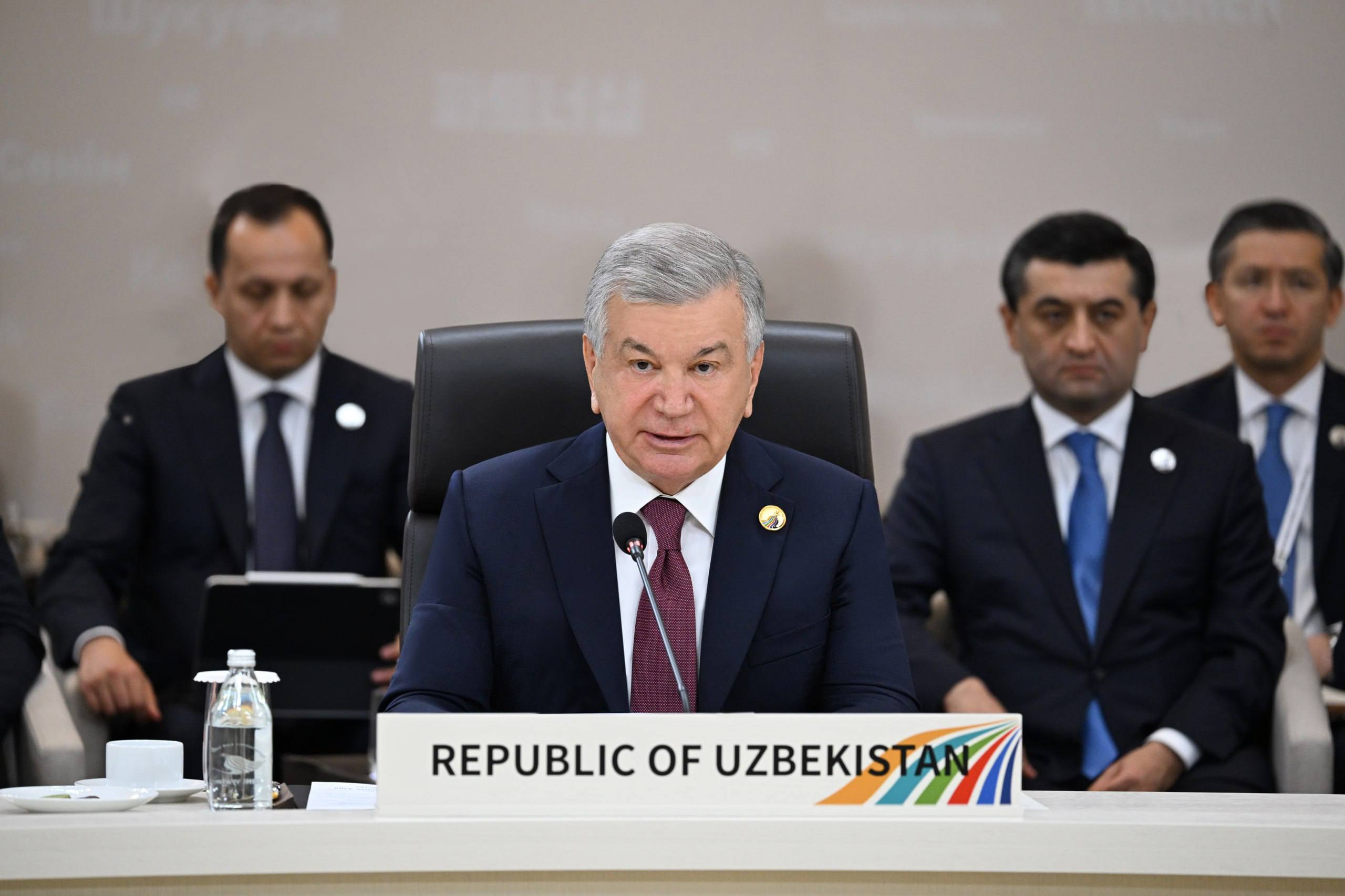
As Shavkat Mirziyoyev noted, “in today’s world, the pace of global change is increasingly outstripping the ability of states to adapt to it.” In this regard, the President proposed that a Portfolio of Forward-Looking Development Projects serve as a practical instrument for achieving this objective. It would include breakthrough initiatives capable of generating new sources of growth and creating long-term opportunities for the countries of Central Asia and Korea.
The proposed approach also has a clear economic foundation. The countries of the region are now home to more than 80 million people, while their combined GDP has already exceeded $500 billion. Korea, in turn, is one of Asia’s most technologically advanced economies, with a GDP of approximately $1.9 trillion, and ranks among the global leaders in research and development spending, at around 5% of GDP. The proposed model therefore brings together two complementary areas of potential: Central Asia’s growing market and production base, on the one hand, and Korea’s technological, investment and engineering capabilities, on the other.
The proposed initiative has a solid foundation for implementation. Nearly two decades of cooperation have resulted in a stable institutional framework among the countries involved. The Republic of Korea–Central Asia Forum has operated since 2007 as an annual multilateral mechanism for Seoul’s engagement with the five Central Asian states. In 2017, its permanent Secretariat was officially established to implement cooperation programmes and coordinate with government institutions and partner organisations across Central Asia. Over this period, cooperation has expanded well beyond the initial political dialogue. Economic, parliamentary, expert and humanitarian tracks have been established, while in 2024 the Republic of Korea launched the K-Silk Road initiative, adding a further economic and strategic dimension to the partnership.
Against this background, the initiatives put forward at the first summit at the level of heads of state can be viewed as a further development of the experience accumulated to date.
President Shavkat Mirziyoyev proposed a number of practical mechanisms that could become components of the future project portfolio. These include the establishment of a Central Asia–Republic of Korea Industrial and Technology Park, increasing mutual trade to $20 billion by 2030, creating a regional investment platform for critical minerals, developing climate and carbon partnerships, and establishing a workforce training system based on the “demand–training–employment” principle. Over time, these initiatives could complement one another and function as elements of a unified model of long-term cooperation.
This is particularly relevant for Uzbekistan given the already established economic foundation of its relations with Korea. According to the National Statistics Committee, bilateral trade amounted to $1.1 billion in January–July 2026. During the same period, 730 enterprises with South Korean capital were operating in Uzbekistan, while Korean investment and loans directed towards fixed capital amounted to $216.4 million in January–June. This suggests that, for Tashkent, the new format could primarily be used to expand existing cooperation — moving from individual enterprises and projects towards larger-scale production, technology and export value chains.
Such an approach is directly aligned with the objectives of the Uzbekistan–2030 Strategy, which provides for the transition towards a technological and innovation-driven growth model, the development of higher value-added industries, and the strengthening of the country’s position in global production chains. Accordingly, the Korean track can be viewed not only as a foreign economic cooperation avenue, but also as one of the instruments for addressing Uzbekistan’s domestic development objectives while simultaneously strengthening its role in the implementation of regional projects across Central Asia.