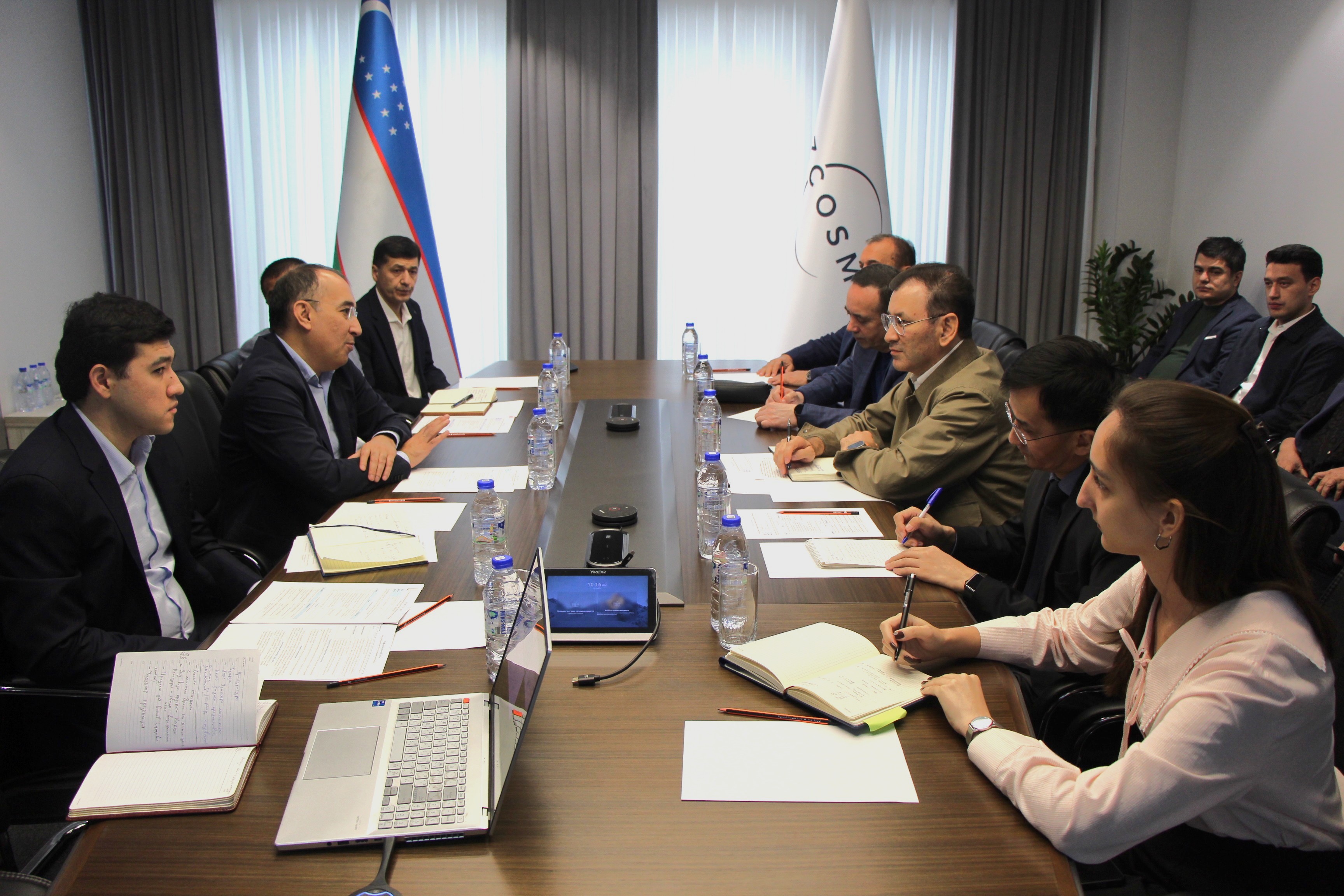
During the meeting, they learned about the Agency’s main areas of work, including approaches to acquiring, processing and applying Earth observation data.
Uzbekcosmos specialists presented the capabilities of the national space monitoring system. Discussions explored how satellite imagery can be used to track spatial changes, compare data across different periods and provide an objective evidence base for studying natural and socioeconomic processes.
The meeting also examined the use of space technologies to assess environmental conditions, the state of forests and green spaces, land and natural resource use, and the impacts of climate change.
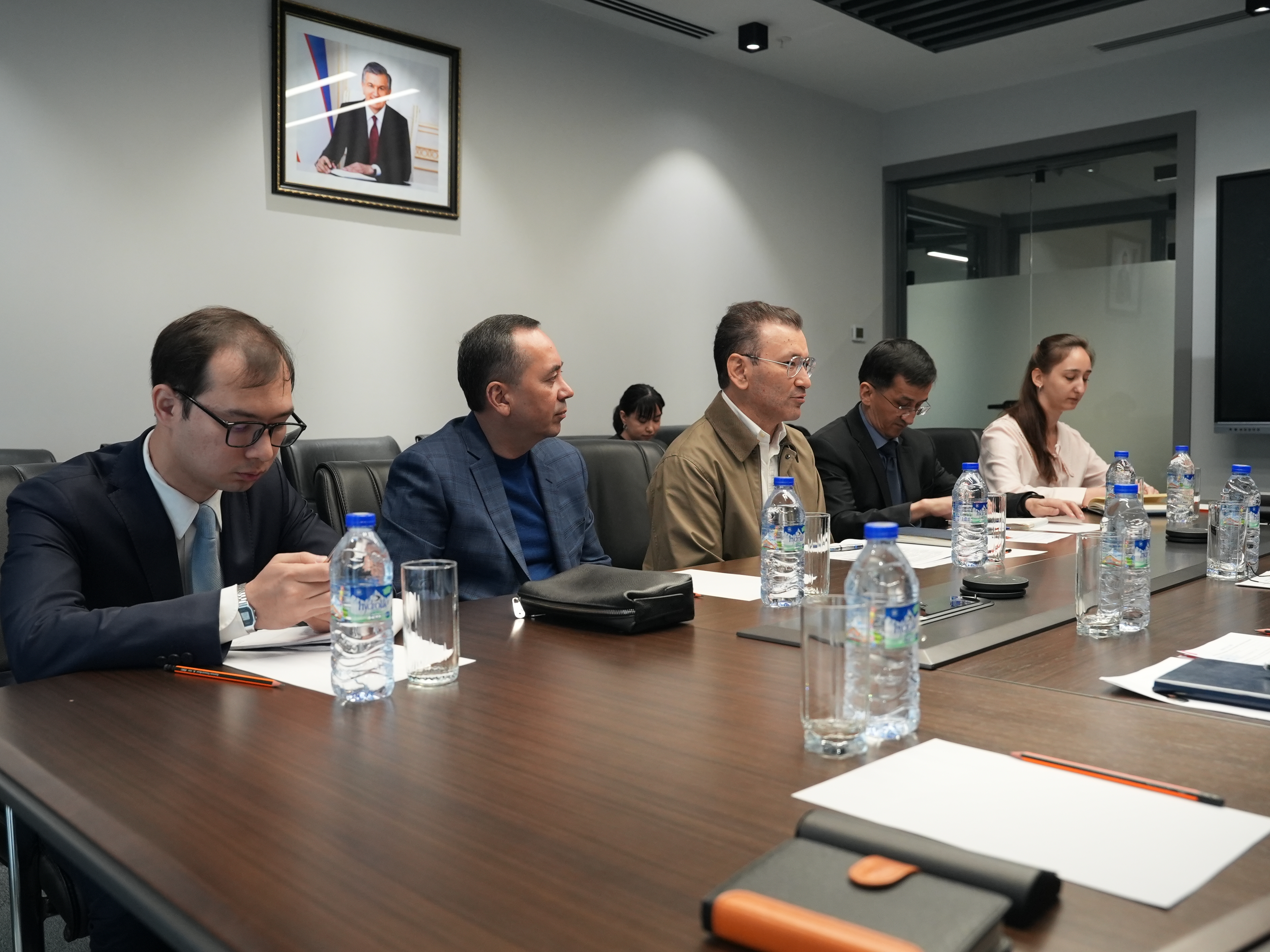
The system’s practical capabilities were demonstrated through examples of continuous reservoir monitoring, assessments of agricultural water use, crop conditions and land-use efficiency.
The researchers also learned about the development of satellite technologies in Uzbekistan. In August 2026, the Samarkand-2028 hyperspectral satellite was placed into orbit through cooperation between Uzbekcosmos and the Chinese company STAR.VISION. An artificial intelligence module developed by Uzbek specialists is integrated into its onboard system, enabling images to be processed directly in orbit.
Plans were presented for Uzbekistan’s first national scientific satellite, Mirzo Ulugbek, scheduled for launch in 2028. The project includes training Uzbek engineers and building domestic capabilities in spacecraft design, operation and practical applications.
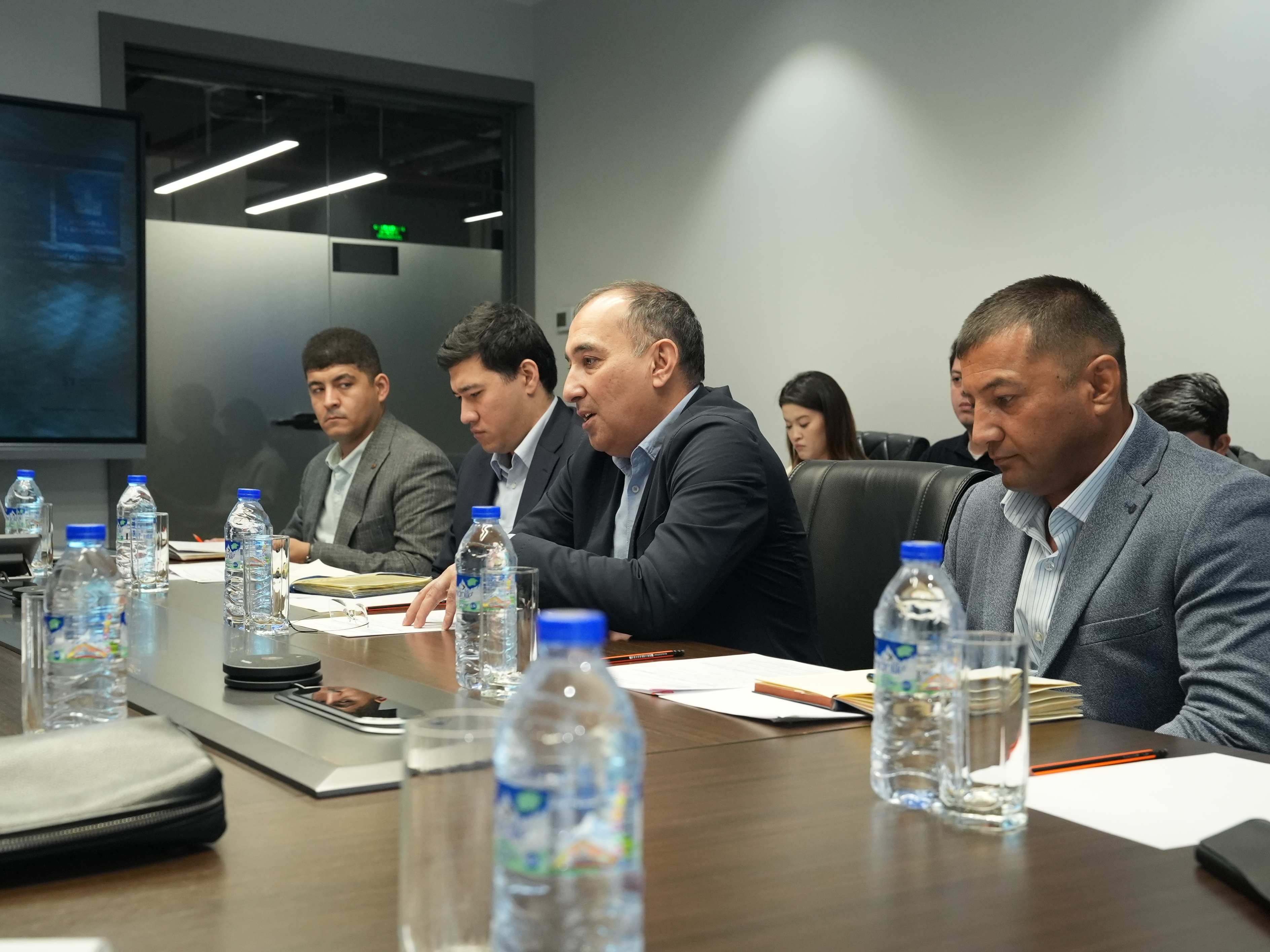
Particular attention was paid to preparations for the International Astronautical Congress, IAC 2028, in Samarkand, which will bring together leading space agencies, research centres and technology companies from around the world.
For IICA, the use of satellite data to study regional developments is of particular interest. Comparable information on ecosystems, glaciers, land and transboundary river basins can improve the quality of analysis of climate and environmental changes in Central Asia.
The visit concluded with an exchange of views on the use of space technologies in research. The knowledge gained and practical examples presented will inform the Institute’s analytical work on sustainable regional development.