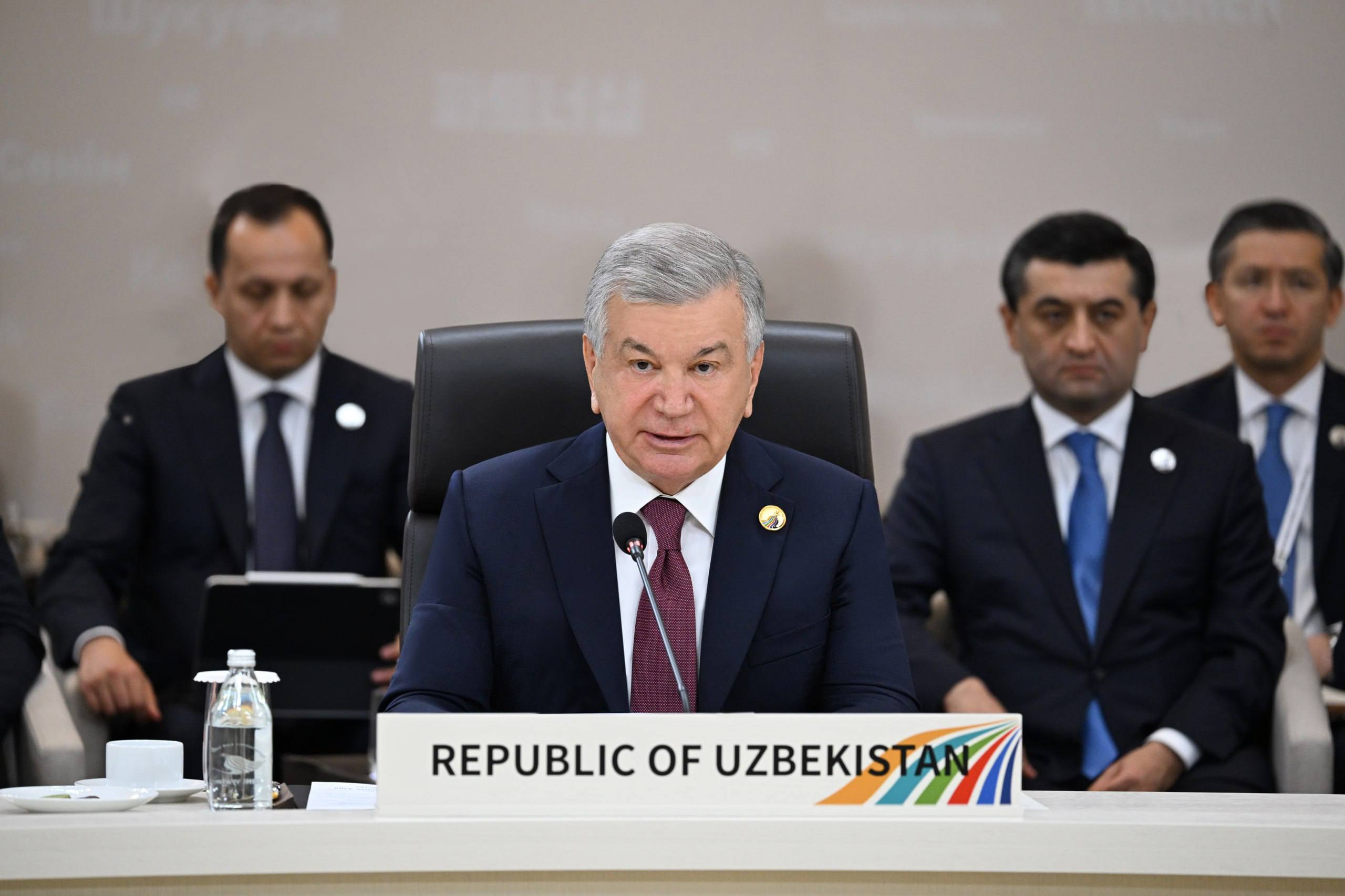
The initiative reflects the demographic profile of the region. As Shavkat Mirziyoyev noted, Central Asia is “a region of special demographic energy, where young people under the age of 30 make up more than half of the population.” According to the President, “it is the younger generation that will determine the competitiveness of our countries.” It is therefore essential to ensure that young people become an integral part of the modern technological economy.
The proposed principle directly addresses this objective. Training would begin with the needs identified by companies, continue at universities and vocational training centres across the region, and culminate in employment in the relevant profession. As the President emphasised, “such an approach will pave the way for the professional future of many young talents and will ensure the training of highly qualified specialists for our joint projects.” The President of Uzbekistan also highlighted the joint development and deployment of artificial intelligence, proposing that President Lee Jae Myung’s doctrine of an “Indispensable Korea” become one of the key pillars of this process in Central Asia.
In my view, this initiative has the potential to give the Central Asia–Republic of Korea format a genuinely long-term dimension. Trade, investment and industrial cooperation generate results today, while investment in people lays the foundations for relations that can endure for decades. Young professionals familiar with Korean technologies and business culture will gradually become a natural link between the region’s economies and societies.
Importantly, the new Partnership also brings together the other proposals put forward at the Summit. The Industrial and Technological Park, critical minerals processing and climate projects will require engineers and skilled technical personnel, and this mechanism can help provide the necessary workforce.
The proposal advanced by the President of Uzbekistan also builds on many years of practical cooperation with the Republic of Korea in vocational education and workforce development. In 2007, at the outset of the multilateral dialogue, when the Central Asia–Republic of Korea Cooperation Forum was established at Seoul’s initiative, KOICA launched its first vocational education project in Uzbekistan. In August of the same year, Uzbekistan adopted a resolution establishing a Vocational Training Centre with the participation of the Korean agency.
The Centre opened in Tashkent with the capacity to train approximately 360 young people annually in electronics, mechanical engineering, automotive repair and information technology. With KOICA’s support, similar centres were subsequently established in Samarkand, Shahrisabz, Fergana and Urgench. According to the OECD, more than 11,000 people received training at these centres over 11 years, acquiring professional skills in information and communication technology, electronics, automotive servicing, metalworking, welding and the textile industry.
Similar efforts are also being undertaken by the Republic of Korea in other Central Asian countries. Projects are being implemented to advance vocational and higher education, train IT specialists and introduce systems for the recognition and certification of qualifications. The Republic of Korea has firmly established itself as one of the most sought-after study destinations among young people in the region, while the number of Central Asian students at Korean universities continues to grow each year.
These years of cooperation have therefore generated considerable experience across the region. However, this experience still consists largely of individual projects and programmes implemented separately in different countries.
At the same time, as Central Asia’s population of more than 80 million grows and its national economies modernise, demand for qualified professionals is increasing, requiring a more systematic approach. The initiative put forward by the President of Uzbekistan provides an opportunity to consolidate the accumulated experience into an integrated framework serving the interests of Central Asia as a whole.
This is the central purpose of the proposed Partnership. The principle of “order – preparation – employment” establishes a clear pathway from education to work, ensuring that the knowledge and skills acquired by young people are aligned from the outset with employers’ needs and are directly applicable to joint projects.
For Central Asian youth, this means access to advanced technologies, Korean expertise and clear professional prospects. Universities and training centres across the five Central Asian countries, in turn, will have an opportunity to work according to comparable standards and exchange best practices.
This approach is also reflected in the outcomes of the Summit. The provisions of the Seoul Declaration on training personnel in line with the needs of the economy and expanding cooperation among universities are consistent with the proposed Partnership and demonstrate that human capital development has become a shared priority for all participants in the Central Asia–Republic of Korea format.